Update
Cash and the Decade Ahead: Inside Guaranteed Income Now 2026
05. 29. 2026
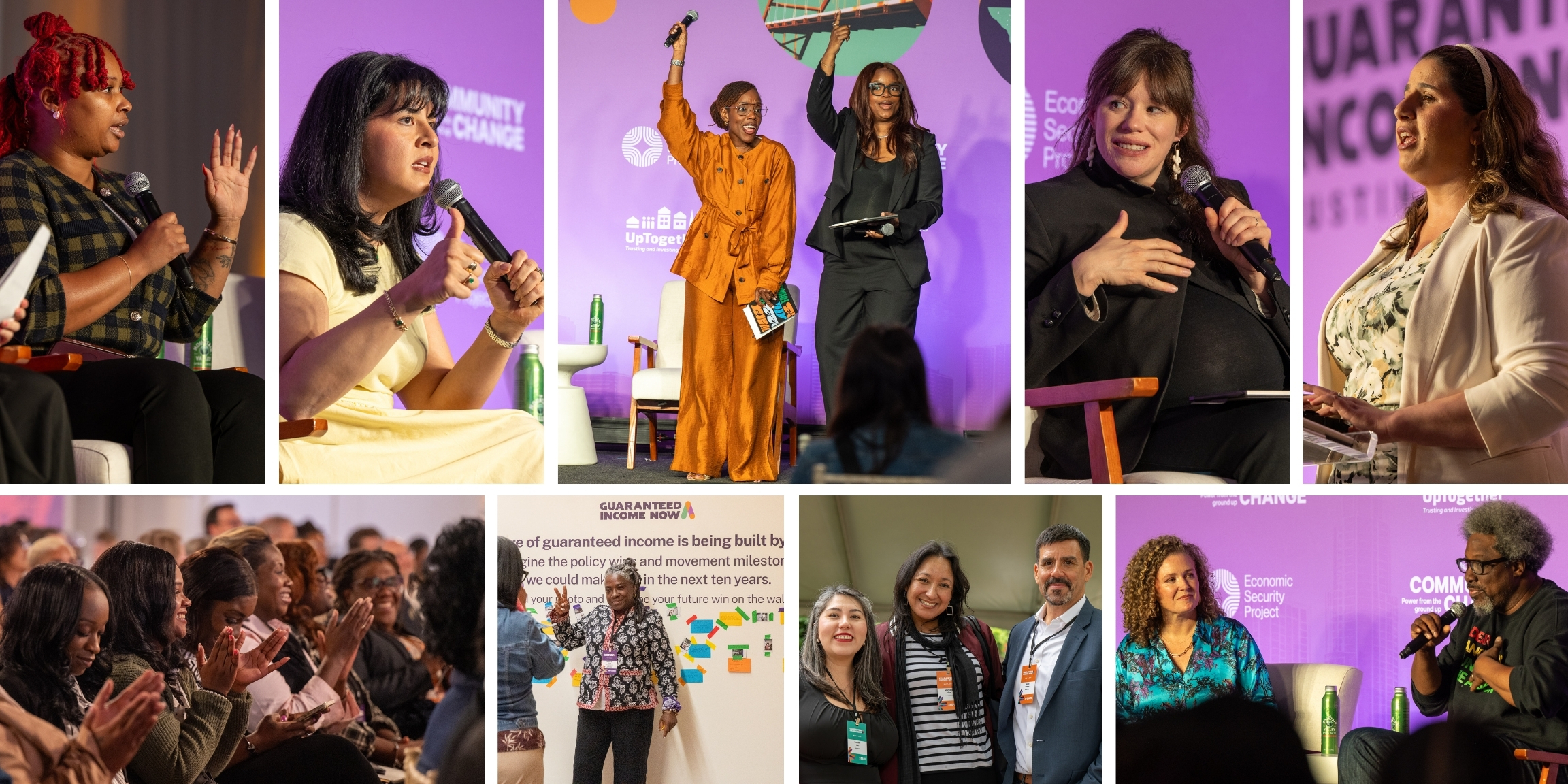
Ten years ago, the idea of giving people cash — with no strings attached — would get you laughed out of most rooms. Earlier this month in Austin, 333 people, including organizers, policymakers, researchers, elected leaders, and (75!) guaranteed income pilot participants from 37 states, gathered at Guaranteed Income NOW 2026 to mark how far the cash movement has come and chart what comes next.
What started with two pilots in Stockton and Jackson has grown into 230 pilots putting cash in the hands of 70,000 families and billions into the pockets of Americans via tax credits and other policy innovations. An idea once dismissed as impossible has become a movement reshaping how this country thinks about cash, deservedness, and economic freedom.
We gathered at a moment when the affordability crisis, AI disruption, and climate upheaval are transforming our economy, deepening existing inequalities and hitting communities already under attack. Cash is one of the most tangible solutions we have to help families navigate this period of unpredictable transition. GI NOW’s speakers and the conversations that happened in those rooms in Austin were a reminder of the power of cash to help communities through times of crisis, build resilience in moments of transition, and create new champions by giving people the chance to lead.
W. Kamau Bell and Natalie Foster opened with a conversation on the role culture plays in facilitating policy change. Quoting his friend, the artist Favianna Rodriguez, Kamau put it: “Culture predicts political change.” Which is exactly why supporting the artists and creators who shape culture matters more now than ever. Lorella Praeli and Dr. Manuel Pastor brought heart and laughter to the question of what it will take to build a winning coalition, reminding us that working-class communities are not monolithic and our movement needs to be inclusive of all people.
Brittany Packnett Cunningham sat down with Dr. Aisha Nyandoro for an inspiring conversation about what economic freedom truly feels like when communities have it. As Brittany put it, economic freedom is more than material — it’s “a calm nervous system,” an unleashed imagination, the room to dream without limits. And Boston City Councilwoman Julia Mejia spoke about her own experience as a GI participant — how that stability didn’t just steady her financially, it gave her the foundation to fight for the change she wanted to see. She’s living proof that cash doesn’t just support people, it builds leaders.
Cash works, and people in the room kept making that case in conversation after conversation. It steadies families through crises. It opens doors that were closed. It lets people imagine a better future and then build toward it.
The cash movement has made tremendous strides in the past decade and the road ahead will demand even more from its champions. The economic disruptions facing families are bigger and faster than in years before, and the stakes for getting the response right are higher. If the last ten years taught us anything, it’s that we can do hard things, and we do them best together.
Throughout the convening, attendees gathered around a wall tracing the 10-year history of guaranteed income, and on the back, we invited people to share their vision for the future. Pilot participant Ruth Devore wrote: “Financial struggle will not be the norm. It will be the past.” That’s the world we’re walking toward.
Thank you to Community Change and UpTogether for co-hosting and bringing their frontline perspectives into the room. You can watch all of the sessions, see photos, and explore resources on our GI NOW 2026 resource page.
Cash for Our Contribution
What do we owe the people whose work built the AI technology that’s transforming our economy?
In a new paper, ESP fellow Rayan Semery-Palumbo argues that a guaranteed income is one answer, but how we frame that cash will determine whether it empowers people as contributing members of our communities or quietly tells them their work is obsolete.
His proposal: Reframe cash support as recovered wages. Recognition of what we are owed for our contributions to society.
Since 1975, $79 trillion in income has been redirected from the bottom 90% of American workers to the top 10% — nearly $1 million per worker over a career. That missing income becomes the home never bought, the retirement never saved. It is years of worry that could have been spent living with agency and the freedom to live life on their own terms.
Now AI is arriving on top of that loss, threatening jobs that workers have long built their lives around and closing off career pathways for younger generations.
Rayan brings academic research and lived experience to this argument. His mom spent fifteen years at a call center before AI, trained on calls like the ones she made daily, replaced her in 2024. She is one of millions of workers — caregivers, drivers, cashiers, teachers — whose contributions held this country together and were never fairly paid for their work. Recovered Wages names what they are owed, and makes the case for finally giving it back. Read the paper here.
Fighting for Affordable Healthcare
We held our third Healthcare Heist Week of Action on May 4-10 to draw national attention to the skyrocketing Affordable Care Act premiums now facing millions of working families and pressure our leaders to protect care and lower costs. This time around, we joined forces with partners Unrig Our Economy and Social Security Works’ Stop Taking Our Healthcare campaign.
We combined our collective power to mobilize over 32 co-sponsors for nearly 40 events from coast to coast, including rallies in New Jersey and Iowa, community conversations with folks who will bear the brunt of these awful cuts in Virginia and Michigan, and press conferences outside hospitals at risk of closure in California and Colorado. We held a virtual town hall with Representatives Brendan Boyle, Debbie Dingelle, John Morelle, and Adelita Grijalva to speak out against H.R.1’s cuts, and elevated the voices of people like ESP storyteller Audrey from Omaha, who now has to dip into her retirement savings to pay for the care that she and her husband need to stay healthy. Together, this campaign generated dozens of press hits and social media posts that highlighted the need for urgent action for better, more affordable healthcare.
As Medicaid cuts start to kick in for most Americans later this year, we’ll continue driving the message home: we should be funding universal healthcare, not tax cuts for billionaires and corporations.
ICYMI: Our Picks
From the lessons of Direct File to how grocery store monopolies are squeezing the workers who stock our shelves, here’s what caught our attention this month:
- ESP fellows release report on the future of tax filing
Filing taxes costs the average American $160 and 9 hours in fees to private companies that have lobbied for decades to keep the system complicated. In 2024, Direct File proved it didn’t have to be that way, and our Tax Filing Fellows’ new report documents what worked and lays out how a future administration can bring it back. “We tell this story not to assign blame or extract tidy lessons, but because we believe it is an interesting and little-known account of how a technocratic idea gets onto the political agenda — a case study in making change.” - I spoke to Inside Philanthropy on the ‘no regret’ policies we need to invest in for the AI transition
We need to move past analysis paralysis on whether AI comes for jobs and start pursuing solutions that address the affordability crisis and prepare families for the AI transition, like modernizing our tax code, establishing an income floor, and implementing a four-day work week. - POP! Economy’s explainer on grocery consolidation and the cost to workers
A grocery job in the 90s could buy you a house. Today, 78% of Kroger workers can’t afford to eat, and decades of mergers and declining union power are why. “It should anger us all that they stock our shelves every day, yet can’t afford to fill their own at home.” - Watch ESP’s Mike Konczal testify before the House Oversight Committee
Presidential pressure on the Federal Reserve creates a “political instability premium” that raises rates on credit cards, mortgages, and auto loans Americans use every day — and erodes trust in the institution in ways that will take a generation to rebuild. As Mike explained, the Federal Reserve’s independence “is a fiscal concern just as much as a democratic one.”