Economic Futures
A People-Powered Coalition Delivered for Texas Families
06. 26. 2025
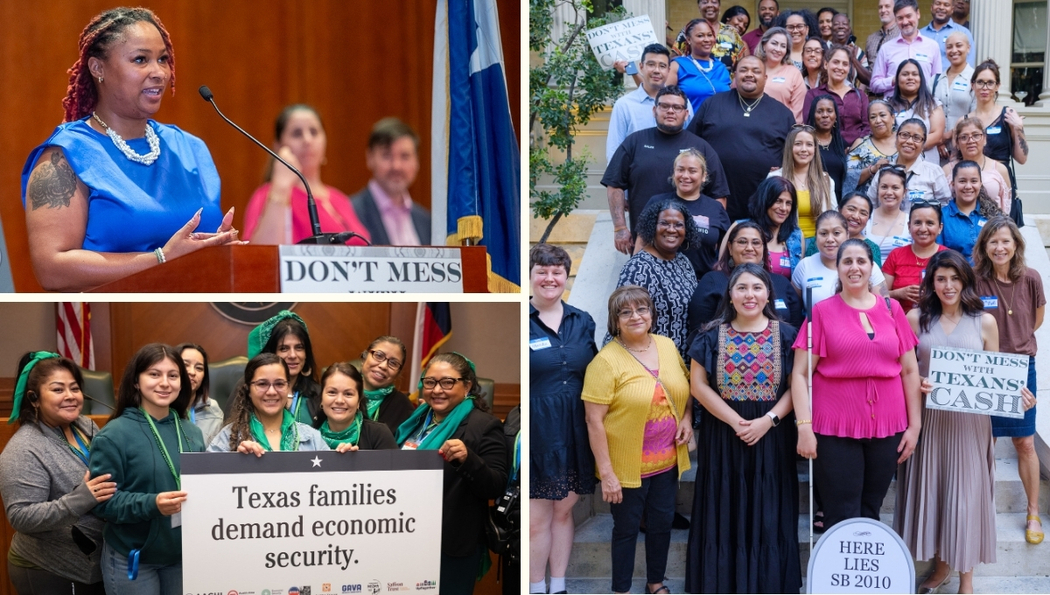
Guaranteed income (GI) works for families—and that’s exactly why opponents are trying to shut it down.
Over a year ago, we launched the Guaranteed Income Blueprint, a 10-year roadmap to defend, maintain, and grow GI pilots across the country, and build the pathways that move those pilots to policy. A core strategy? Build in-state cash coalitions equipped to lead public campaigns to defend pilots under attack and pave the way for new ones that deliver cash to more families.
Texas was one of the first places we helped seed and support a local cash coalition, resourcing partners, identifying legislative allies, and building communications, political, and organizing infrastructure that could be quickly mobilized in moments of opportunity or challenge.
So when an extremist, right-wing lobbying group spent millions on a statewide GI ban, the coalition was ready.
In a remarkable victory earlier this month, Texas families, lawmakers, and partners like Every Texan and UpTogether defeated a bill that would have banned GI in Texas. The organization leading the ban, The Foundation for Government Accountability (FGA), is a billionaire-funded group behind copycat GI bans across the country.
This victory is a testament to what’s possible when local organizations with deep community ties lead the way, and national partners show up with targeted support. Economic Security Project Action drew on experience from previous cash fights to support the Texas cash coalition, securing several media placements in the local NPR affiliate KUT, amplifying key moments on social media, engaging legislative champions, and resourcing major events—see photos above!
Our partnership kicked off with a successful advocacy day that brought 60 families from all across Texas to the state capitol, where they shared their personal stories with lawmakers. From the working mom who finally got the breathing room to spend more time with her kids, to the retired public school cafeteria worker who could finally afford transportation to her medical appointments, to the mother of four who was able to continue paying her bills after an emergency heart surgery, Texans shared how cash helped them weather crises, regain stability, and take control of their futures.
This day of testimony marked a turning point in the campaign. Parents and community members—empowered by having their stories heard—kept showing up to testify, organize, and shift the public narrative around guaranteed income. The coalition also grew to include faith leaders who met with Republican lawmakers to keep the pressure on. What the opposition thought would be a slam-dunk win was anything but, and by the end of the legislative cycle, support for the GI ban unraveled.
That’s the power of a well-executed, people-powered campaign—even in deeply red states like Texas.
As cash-based solutions gain attention and deliver real solutions for families, more and more groups like FGA will try to derail economic stability for families. We’re meeting this moment with a clear mandate: defend pilots under attack while investing in long-term infrastructure to build cash coalitions in emerging states (red, purple, and blue alike), and build the organizing and narrative power to win for families.
Texas showed us what’s possible.
What Else We’ve Been Up To
Texas isn’t Alone: Illinois, New York, and Vermont Expand Cash Support for Families
Texas isn’t the only state making headlines—across the country, states are expanding cash support for families, too. In Illinois, years of organizing by Economic Security Illinois and the Cost-of-Living Refund Coalition paid off: Governor Pritzker just signed the state budget, which doubles the state’s Child Tax Credit to up to $600 per child.
We also helped secure major wins for families in New York and Vermont. In New York, the Empire State Child Credit tripled and two new cash programs were passed: an $1,800 “Baby Benefit” for new moms and a one-time “Inflation Refund Check” of up to $400 for families this year. And just last week, Vermont expanded its $1,000-per-child Child Tax Credit for children up to six years old and boosted their Earned Income Tax Credit from 38% to 100% of the federal credit for filers without children, all with bipartisan support.
At a time when federal support for families—like Medicaid, Medicare, and SNAP—is under attack, it’s critical that states step up and put cash in working families’ pockets.
ICYMI: Our Picks
While wins in Texas show what’s possible, the work isn’t done. These are a few stories that caught our attention this month that highlight some of the challenges families face and what’s being done about it.
- Is AI causing Chicagoans’ electricity bills to go up?
ComEd recently sent an email to Chicago residents explaining how bills are set to increase, not due to a recession, tariffs, or the Chicago heat, but because of the big data centers needed to power AI. And one Chicago resident isn’t happy about it. “We’re in a climate crisis, a price crisis, perhaps a recession. Why not, why shouldn’t I pay for A, too?” - “Corporate profits doubled to $4 trillion since 2010, while labor’s share of national income fell.”
ESP President Natalie Foster looks at new Federal Reserve data that confirms what many of us have long felt: the system is rigged. Since 2010, corporate profits have doubled while labor’s share of income has dropped—inequities that the pandemic accelerated.“Here’s what really gets me: 76% of those increased corporate profits went straight to shareholders as dividends. Not to workers who created that value. Not to building better communities. The profits went to people who were already wealthy.” - Michael Mezzatesta X POP! Economy: AI is being pushed onto everything, and it’s working people who will foot the bill.
AI companies are cutting secret deals that leave the public paying for the infrastructure to power AI. And with a provision to block states from regulating AI for the next 10 years included in the federal tax bill, this type of abuse is only likely to grow.“This is a classic example of corporations socializing their costs and then privatizing their profits.” - RealPage is suing Berkeley, CA, after the city council passed a ban on rent-pricing algorithms
RealPage is suing the city of Berkeley, claiming its rent-setting algorithm is protected by free speech. Its software collects data from landlords like rent prices and lease dates to generate pricing recommendations that often push rents higher. Cities across the country have banned or are working to ban it, but this lawsuit threatens to roll back progress.“It is laughable to say that the First Amendment protects your right to illegal price coordination.” - Dynamic pricing, Ticketmaster, and the Cowboy Carter tour
Fantastic explainer from Brian Baez about how Live Nation Entertainment’s monopoly is driving up prices for fans. This time it’s BeyHive fans feeling the sting.“Ticketmaster is a monopoly. They have exclusive control and dominance of the tickets. They change the price based on how much profit they can make at the time.”