In the Media
CHICAGO WGN NEWS: Digital price tags at grocery stores raise surveillance pricing fears
11. 04. 2026
Economic Security Project Illinois is pushing for a state law that would ban companies from using personal data to set the prices consumers pay.
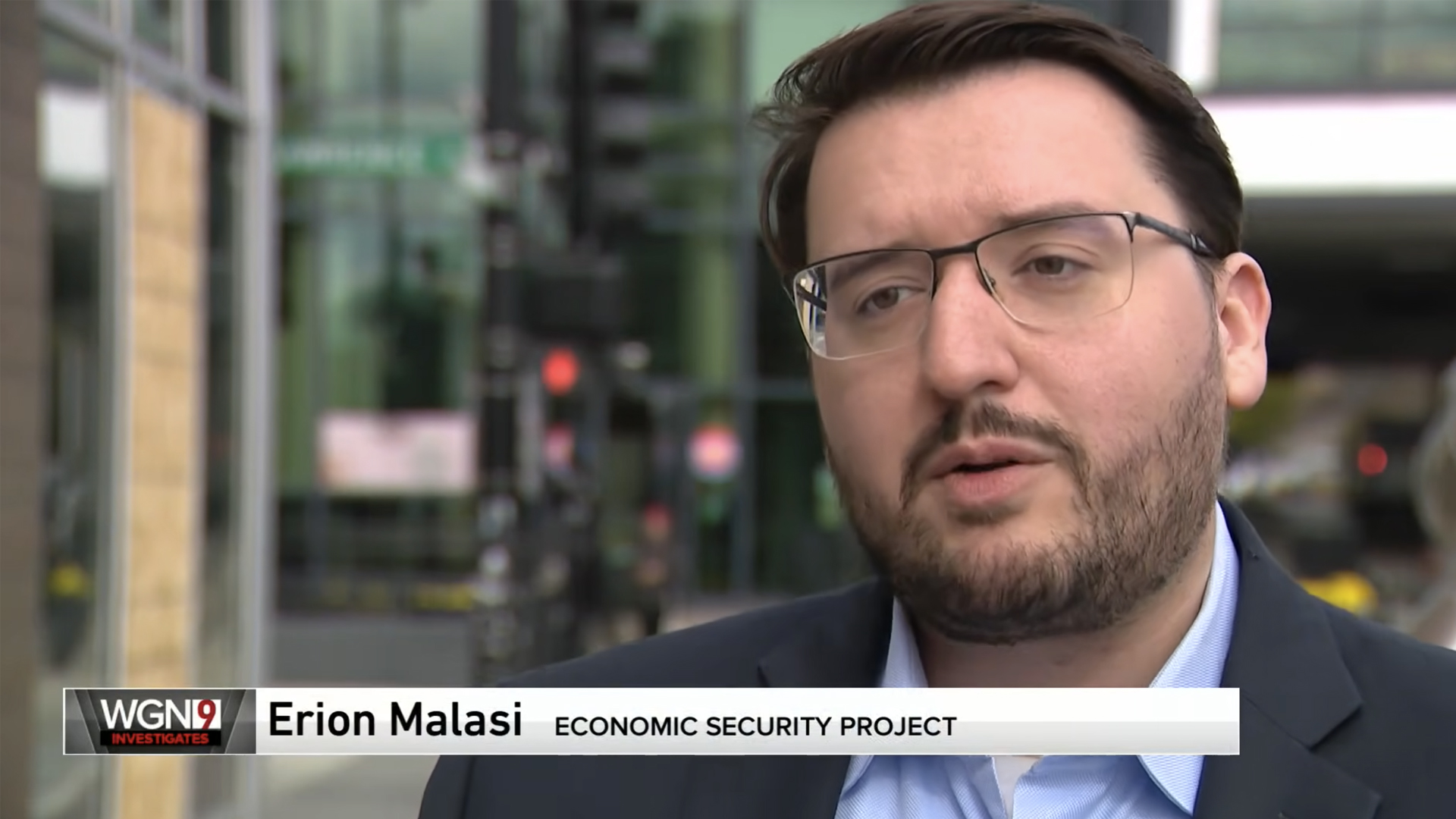
CHICAGO (WGN) — From websites to brick-and-mortar stores, it’s easier than ever for companies to target shoppers with prices based on their personal data.
Now, a recent change at many grocery stores is raising concerns about so-called surveillance pricing.
At the grocery store, opinions about privacy are a dime a dozen.
“How comfortable are you with what the stores know about you and your spending?” WGN’s Ben Bradley asked.
“Not very comfortable at all, honestly. We don’t really have any privacy nowadays,” one shopper said.
“One side of me is like, ‘Oh, maybe an invasion of privacy,’ and the other side thinks, ‘They have my data. They do know me as a person, and so maybe they are marketing products that I would like,’” another shopper said.
Look closely the next time you’re at the grocery store, and you may notice paper price tags have been replaced by digital ones.
Stores say the electronic labels save employees days of work every time prices change.
But privacy experts worry the technology could open the door to what’s known as “surveillance pricing,” in which shoppers are charged different prices for the same products based on their shopping habits, demographics or urgent needs.
“I think a lot of folks have trusted loyalty programs for a long time, but now we’re seeing data being used in such a way that it charges us higher prices and offers us those loyalty deals when we’re most vulnerable or least likely to shop,” said Erion Malasi with the Economic Security Project of Illinois. “Sometimes it’s great and you get a deal. Other times, when you’ve been Googling ‘flu symptoms’ for a long time, you might see a higher price or not be offered the same discount as somebody else because they know you’re in need.”
The Economic Security Project Illinois is pushing for a state law that would ban companies from using personal data to set the prices consumers pay.
Major grocery store chains told WGN Investigates they don’t currently engage in surveillance pricing. But they didn’t respond to questions about whether they’d rule out using it in the future.
“We want to protect consumers and make sure that when we give our data to one company and then it’s sold to another, it’s not being used against us in a way that we never consented to, and that starts with looking at price tags,” Malasi said.
The National Retail Federation insists digital shelf labels are display technology, not pricing technology. They also say there is no evidence to suggest U.S. retailers are specifically targeting individuals with price changes.
“We can compare prices while we’re standing in the store with all their competitors online and find a better deal,” said Jason Staczewski with the National Retail Federation. “In that environment, they know they have to provide great service, and great service doesn’t mean fluctuating prices.”
But the reality is online sellers, from airlines to Amazon, already use algorithms that constantly change the prices shoppers are offered.
The practice is known as “dynamic pricing.” Companies say the changes are based on algorithms that evaluate factors like competition and inventory, sometimes second by second, rather than an individual’s personal behavior.
“They all have the data. They know exactly what we’re doing. They know exactly whether they can get us in this way or that way. You live your life. I don’t have an iPhone, so I avoid some of it,” a shopper said.
This change in the grocery aisle means shoppers now have one more item on their list: It’s a question about whether digital price tags are a sign that our privacy is about to become even more perishable.