Update
Cash is Personal for Me
07. 30. 2026
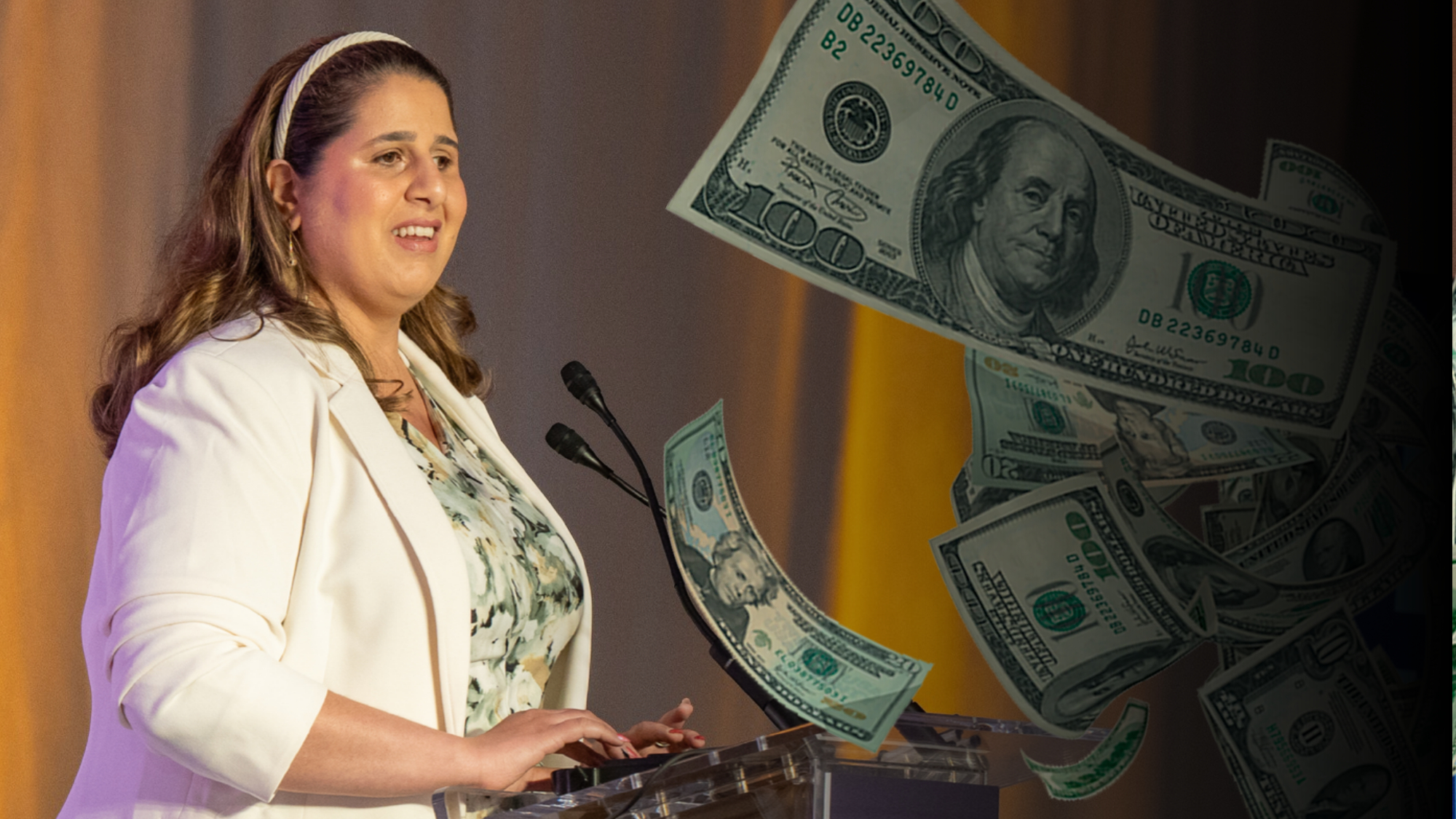
Twelve years ago, when I was in college, I received Supplemental Security Income because I’m blind. Those extra couple hundred dollars a month didn’t fix the systems that make life expensive and precarious for me, but they gave me enough breathing room to figure out the transition from college student to working adult. I was able to buy better technology, get a new cane, and take on internships that eventually led to my first full-time job. While I graduated with student debt, I had professional opportunities that prevented me from drowning under the weight of those monthly payments. It’s no small thing to say that cash changed the trajectory of my life, and I have since made it my mission to help others build that same stability.
For the past decade, ESP and the Guaranteed Income Community of Practice have worked to prove what I experienced firsthand – that cash creates stability and opportunity. We recently celebrated a milestone of 250 cash pilots across 40 states that have put cash directly in the hands of 80,000 people, trusting individuals with the agency and autonomy to decide what is best for their own lives. In Baltimore, young parents receiving cash were more than twice as likely to apply for college or professional training. In Providence, after 18 months of cash support, participants were more likely to have moved to better neighborhoods and higher-quality homes. In New York City, homelessness among young adults aging out of foster care fell from 13 to 1 percent, and more than a quarter used the money to leave an unsafe living situation.
When people have cash, they have choices. And right now, families need those choices more than ever.
We are living through an affordability crisis of enormous scale. Rent, groceries, utilities, and childcare have climbed faster than wages, and nearly three-quarters of Americans say the cost of living is their biggest financial concern. Only one-third can comfortably cover an unexpected expense, and young people are postponing major milestones, like living independently, marriage, or starting a family, because they simply can’t afford them. I’m experiencing this firsthand. My monthly bills for childcare and groceries are becoming a second rent, and my utility bills are the highest I’ve ever seen them. Amid the endless debates about how to “fix” our economy, cash may be the most powerful — and underutilized — tool we have.
In the coming weeks, ESP will release three new papers to mark the next frontier of the cash movement and position direct cash as a central tool to help families navigate the affordability crisis. Ten years of pilots have shown us that cash can be extraordinarily effective when coupled with the long-term fight to shape markets that serve people. The next phase of the cash movement is to build on the insights and experiences of the hundreds of pilots and translate that into sustained, durable policymaking so that millions of people can experience the stability and agency that comes with direct cash support.
The first, Putting Cash in Parents’ Pockets: An Executive Action Plan for the Next Presidential Administration, offers a governing agenda for the next administration, detailing four executive actions that a new administration can implement in its first 100 days in office, focused on cash for families with young children. Administrative action is one of the most effective and underutilized levers for delivering direct cash.
The second, Right on Time: How Cash Helps Families Move Through Life’s Transitions, puts forward the view that cash can be most effective when deployed in moments of transition. From the increased costs that come with starting a family, to having your hours cut back at work, to losing your home to a wildfire, most Americans have lived through multiple moments of economic instability and need increased financial flexibility during those transitions.
Our third paper, Cash Works. So Do Its Recipients, synthesizes findings from over 40 pilots and proves that cash leads to better and more work opportunities, pushing back against the harmful narrative that cash discourages employment.
250 pilots and 80,000 participants are worth celebrating. But I’m even more excited about what we build together next and how some of these new ideas will shape the work to come, because 250 years into this American experiment, economic security should be a right, not a privilege.
From Los Angeles to Bakersfield: What Californians Told Us About the Affordability Crisis
Over the past six months, Economic Security California (ESCA) traveled the state to hear directly from Californians about what the affordability crisis feels like in their lives. From Los Angeles to the Inland Empire, Bakersfield to San Diego, the team held listening sessions with more than 250 workers, caregivers, renters, students, small business owners, and parents. What they heard was honest, specific, and often heartbreaking — caregivers paying $500 a month in electricity bills, participants going off medications after prescription costs jumped from $40 to $400, young adults working full-time who can’t imagine ever owning a home.
In conversation after conversation, one truth kept surfacing: costs keep rising while wages remain stagnant. That’s why we built the California Affordability Agenda to fix broken markets and broken incomes by taking on corporate monopolies, shaping tech and AI to work for the real economy, making corporations pay their fair share, and delivering more cash to working families. Learn more about our California Affordability Tour here.
ICYMI: Our Picks
From the student loan squeeze to the case against OpenAI’s IPO, here’s what caught our attention this month:
- A Student Loan Borrower Defaults on Their Loans Every 9 Seconds.
In a new carousel, POP! Economy breaks down how the Trump administration and the majority in Congress are making student loan debt even more punishing, eliminating affordable repayment plans, capping how much students can borrow, and forcing 8 million former SAVE borrowers into monthly payments that will jump by an average of $347. - Chris Hughes Op-ed: Silicon Valley Needs Washington After All
Silicon Valley spent decades insisting it didn’t need Washington. In a new op-ed for The American Prospect, ESP co-founder Chris Hughes explains how AI is proving otherwise, and why the “rule by deal” approach taking hold isn’t the industrial policy we need. “Successful industrial policy requires coherent policy, clear lines of authority, and fair administration.” - The Case Against OpenAI’s IPO
Ahead of OpenAI’s anticipated trillion-dollar IPO, Eyes on OpenAI — a coalition we’re part of — is calling on the SEC to force disclosure of the risks buried in the company’s unusual structure. As Orson Aguilar of LatinoProsperity and Catherine Bracy of TechEquity write in Fortune: “If OpenAI’s IPO fails, it could shake an economy that’s increasingly dependent on the AI boom. If it succeeds, we end up underwriting a company that broke the law and the promise it made to us, the public.” - Reviving Direct File
For two years, Direct File proved government can build a tax filing tool people actually trust — 94% of users rated it Excellent or Above Average before the Trump administration shut it down. In Democracy: A Journal of Ideas, ESP’s Kelli Smith and ESP Fellow Gabriel Zucker lay out what a future administration must do to bring it back stronger. “In 2024 and 2025, Direct File proved that the IRS can build something that works—something taxpayers trust, use, and want back.”